
10 things I wish someone had told me about menopause and fitness
New here? The free guide is the best place to start →
A small note: this post contains an affiliate link. If you buy through it, I may earn a small commission at no extra cost to you. I only ever mention things I’ve actually used and would tell a friend about — and this is one of them.
I’ve been training for 36 years and I am constantly learning. What worked in my 30’s doesn’t apply now in my 60’s. After menopause, almost everything I thought I knew about fitness went out the window. I needed to update everything I knew. Not tweak it, no, update it. The training frequency, the rest periods, the protein, the sleep, the whole picture. Nobody hands you a manual when your body changes so to be honest I didn’t know what to expect. So here’s my manual — the real, unglamorous list of what I actually wish someone had told me, before I had to work it out the hard way.
1. Your body responds differently now — listen to it.
The workout that used to leave you fine the next day might leave you wrecked now. That’s not weakness, and it’s not you getting old and soft. That’s what I thought, now that I’m older I’m more tired. It’s simply not true, but what is a fact is that your body may well need more recovery time. So instead of pushing through it I learned to take the time off whether it be a day or two in between training and listen to my body.
2. Three days beats five — every time.
I used to think more was always better. It isn’t, not anymore. Three well-structured give-it-all-you-have sessions a week, done properly, with real recovery in between, will get you further than five rushed, under-recovered ones. This was one of the hardest things for me to actually accept, because I was so accustomed to pushing my body, and I had to learn to accept a slower pace.
3. Rest between sets matters more than you think — 2–3 minutes for compound movements.
Rushing your rest periods to “get it done faster” undermines the whole point of lifting heavy. Honestly for someone who has trained this long I should have known this but I didn’t. I never appreciated the importance of resting between sets to allow your body the real recovery time between the sets to build strength, so take the 2–3 minutes and if they are your compound movements, you might need longer. That’s OK.
4. Gaining muscle is hard now, and some days you’ll feel wired, other days flat.
Nobody warns you about the unpredictability. Yesterday I did an upper body day and found I was stronger in some exercises than before and so am excited to increase it next time. But I know from experience that next time might not be a strong session and for reasons that aren’t obvious. That’s so difficult to accept as you feel like you’re making progress only to have a day where you perhaps aren’t as strong. Remember it’s all part of it and everyone has these days. Just keep going.
5. Focus on strength, not the scale.
In the past few years, I’ve focused my training on strength. Being on my own I wanted to ensure I had strength in later years for carrying groceries, for getting up off the floor easily at eighty, for real life — not for a number on a scale that was never telling you the truth about your body anyway. This is the single biggest mindset shift I’d make if I could go back and tell myself earlier.
6. Don’t ditch cardio completely — add daily walking.
You still want to be able to walk up the stairs without losing your breath. Daily walking, even just twenty or thirty minutes, does more for you long-term than you’d think, and it doesn’t demand anything close to what harder cardio sessions ask of your recovery. I personally aim for 8,000–10,000 steps per day every day. Being someone who always loved sport when younger, I still like to do something that’s challenging whether it be the occasional game of squash or boxing but I now understand this is for enjoyment only and not part of a hard cardio session which I no longer do.
7. Protein — more than you think, every day.
This one genuinely surprised me. What used to be “enough” protein simply isn’t anymore. It’s not a fad or a trend, it’s a real, physical shift in what your body needs to actually hold onto muscle. Something I never knew. In fact I spent most of my training life undereating and it’s only in the past two years that I have come to fully appreciate the fuel our bodies need to grow and maintain muscle. I no longer worry about food, I enjoy it, am conscious of my protein intake and am no longer afraid of carbs, something I think a lot of women who are in my age bracket were.
8. Sleep is not optional. It’s the whole game.
You can do everything else right and still get nowhere if your sleep is a mess. I used to treat sleep as the thing that happened after the “real work” of training and eating well. It’s not after. It’s part of the work. Having said that, menopause and hormones in general have a bad habit of fluctuating and interfering with sleep, and I too still suffer this. I do my best to go to bed early (I’m a morning person so that helps) as I know I can fall asleep quickly and get a decent sleep until the early hours of the morning.
9. You are more dehydrated than you realise — include electrolytes daily.
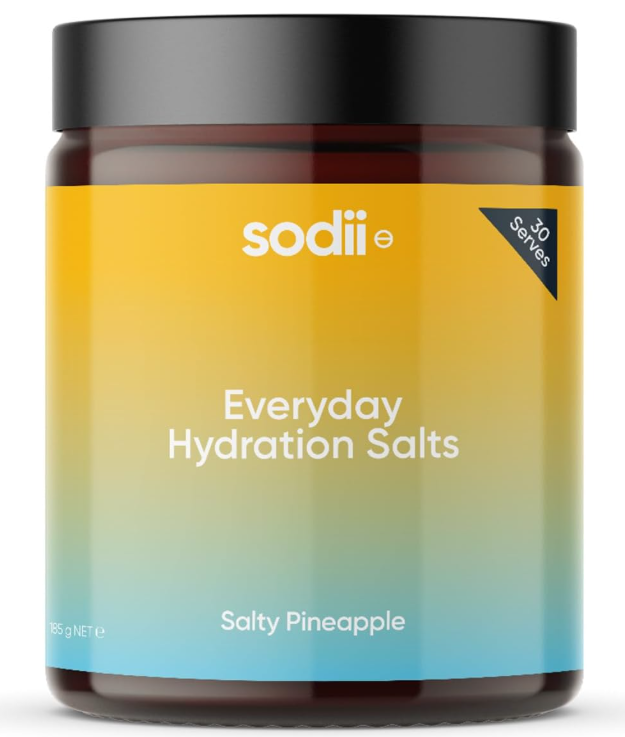
Oh my goodness, my trainer finally got me to understand this issue. He told me I had been dehydrated for years and that just water alone was not the answer. Real electrolyte intake, daily, not just on the days you remember or the days you’re sweating heavily. This one’s easy to overlook and genuinely changes how you feel. Even now I have to make a conscious effort to ensure I am meeting this daily requirement. The ones I’ve settled on and use every day are Sodii Everyday Hydration Salts — the salty pineapple flavour, which sounds ridiculous but genuinely works.
10. Get regular DEXA scans to monitor fat loss and muscle gain.
Again something my trainer instilled in me. The scale can’t tell you what’s actually happening inside your body — whether you’re losing fat, holding muscle, or both. A DEXA scan can. If you’re serious about understanding your own body at this stage, this is worth the investment. Where I live it’s inexpensive — about $79 — and acts as a training guide, analysing results so you can determine if your body is losing fat and gaining and maintaining muscle. It helps build out your training program. Don’t skip it otherwise you’re training with a mask on.
None of this is about chasing who you used to be. It’s about training the body you actually have now, honestly, instead of fighting it or ignoring what it’s telling you. Thirty-six years in, I’m still adjusting. That’s not failure — that’s just what paying attention looks like.
— Mary-Ann
She Has Returned


